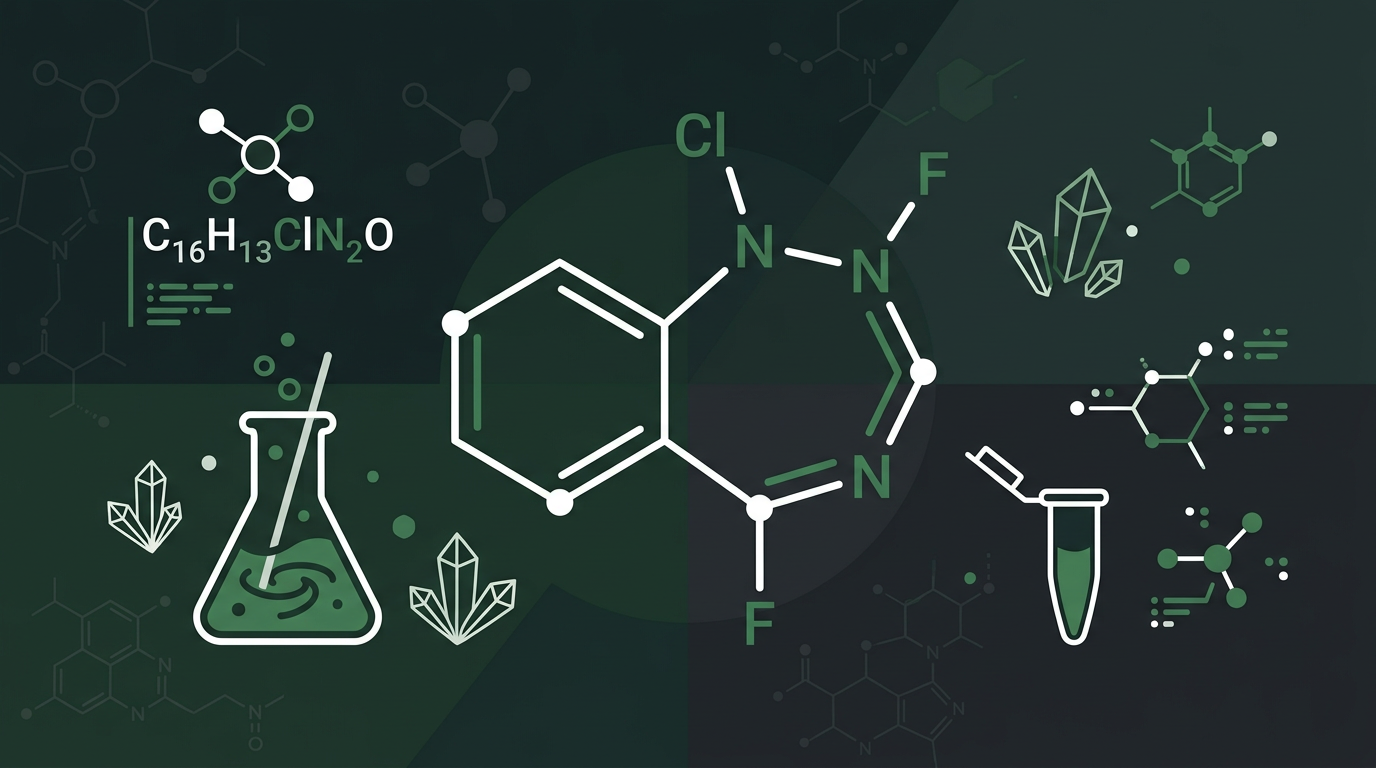
Novel Benzodiazepine Research Chemicals: Bromazolam, Flualprazolam & the Triazolodiazepine Class
Novel Benzodiazepine Research Chemicals: Bromazolam, Flualprazolam & the GABA System
Benzodiazepines have been central to anxiolytic and sedative pharmacology since Librium was first synthesised in 1955. The GABA-A receptor — their primary target — remains one of the most clinically significant ion channels in neuroscience, implicated in anxiety disorders, insomnia, epilepsy, and alcohol withdrawal.
Novel benzodiazepine research chemicals extend this research space, offering compounds with modified binding profiles, receptor subtype selectivity, and pharmacokinetic properties that distinguish them from classic clinical benzodiazepines like diazepam or alprazolam.
This guide covers the key novel diazepine research chemicals available for EU researchers in 2026.
GABA-A Receptor Pharmacology: The Basics
GABA (gamma-aminobutyric acid) is the principal inhibitory neurotransmitter in the mammalian CNS. GABA-A receptors are chloride-permeable ion channels assembled from five subunits, with the most common configuration being 2α, 2β, and 1γ subunit.
Benzodiazepine binding site: Classical benzodiazepines bind at the interface between α and γ2 subunits — the so-called "benzodiazepine site" — acting as positive allosteric modulators (PAMs). They do not activate the receptor directly but enhance the effect of GABA by increasing the frequency of chloride channel opening.
Subunit selectivity determines effect profile:
| α Subunit | Primary Effect | |---|---| | α1 | Sedation, anticonvulsant, amnesia | | α2 | Anxiolytic, muscle relaxant | | α3 | Anxiolytic (secondary) | | α5 | Memory consolidation, sedation |
Novel benzodiazepine research chemicals vary in their subunit selectivity, making them useful tools for dissecting which receptor subtypes mediate specific clinical effects.
Key Novel Benzodiazepine Research Chemicals
Bromazolam
CAS: 57801-95-3
IUPAC: 8-bromo-1-methyl-6-phenyl-4H-[1,2,4]triazolo[4,3-a][1,4]benzodiazepine
Molecular Formula: C17H13BrN4
Molecular Weight: 353.22 g/mol
Class: Triazolobenzodiazepine (same class as alprazolam and triazolam)
Bromazolam belongs to the triazolobenzodiazepine subclass — characterised by the fusion of a triazole ring to the core benzodiazepine scaffold. Structurally, it is closely related to alprazolam but incorporates a bromine substituent at the 8-position, which affects lipophilicity and receptor binding.
Pharmacological Profile:
- Mechanism: GABA-A positive allosteric modulator
- Receptor subtype profile: Broad (similar to alprazolam — α1, α2, α3)
- Potency: Higher than diazepam by binding affinity; comparable to alprazolam
- Duration: Medium-long (8–16 hours)
- Onset: 30–90 minutes (oral)
- Elimination: Hepatic (CYP3A4 metabolism)
Research Applications:
- GABA-A subunit selectivity studies — the bromine substitution's effect on α subtype selectivity vs. alprazolam
- Triazolobenzodiazepine structure-activity relationship (SAR) research
- Pharmacokinetic studies (lipophilicity impact on CNS penetration and clearance)
- Comparative sedation/anxiolysis potency research
Legal Status (EU, March 2026): Controlled in Germany, UK, and several other EU countries. Unscheduled in some jurisdictions — verify country-by-country before ordering.
Flualprazolam
CAS: 28910-91-0
IUPAC: 8-chloro-6-(2-fluorophenyl)-1-methyl-4H-[1,2,4]triazolo[4,3-a][1,4]benzodiazepine
Molecular Formula: C17H12ClFN4
Molecular Weight: 342.76 g/mol
Class: Triazolobenzodiazepine (fluorinated alprazolam analog)
Flualprazolam is alprazolam with a fluorine atom added to the 2-position of the phenyl ring. This fluorination — a common medicinal chemistry strategy — typically increases lipophilicity, can improve blood-brain barrier penetration, and may prolong elimination half-life by affecting metabolic clearance.
Pharmacological Profile:
- Mechanism: GABA-A positive allosteric modulator
- Potency: Reportedly higher than alprazolam; low milligram active
- Duration: Long (10–20+ hours) due to fluorine-mediated metabolic resistance
- Onset: 30–60 minutes
- Note: Long duration means accumulation risk in multi-dose research designs
Research Applications:
- Fluorine substituent effects on benzodiazepine pharmacokinetics
- Extended-duration GABA-A modulation studies
- SAR research comparing fluorinated vs. non-fluorinated triazolobenzodiazepines
- Metabolic stability and CYP enzyme interaction studies
Legal Status (EU, March 2026): Controlled in Germany, UK, Sweden, and others. Status varies significantly — check current national schedules before ordering.
Etizolam
CAS: 40054-69-1
Molecular Formula: C17H15ClN4S
Molecular Weight: 342.84 g/mol
Class: Thienodiazepine (not a classical benzodiazepine — thiophene ring replaces benzene)
Etizolam is technically a thienodiazepine rather than a benzodiazepine, with a thiophene ring replacing the benzene component of the standard scaffold. Despite this distinction, it binds the benzodiazepine site of GABA-A receptors with high affinity and functions pharmacologically as a classical benzodiazepine receptor agonist.
Pharmacological Profile:
- Mechanism: GABA-A PAM (benzodiazepine site)
- Potency: 6–10× more potent than diazepam by binding affinity
- Duration: Medium (6–10 hours)
- Onset: 30–60 minutes
- Notably: Licensed as a pharmaceutical in Japan and India (anxiolytic, insomnia)
Research Value: Etizolam is one of the most well-characterised research chemicals in this class — its pharmaceutical licensing in Japan provides a significant body of published pharmacological data, making it useful as a reference compound in GABA-A research designs.
Compound Comparison Table
| Compound | Class | Potency vs Diazepam | Duration | Primary Research Use | |---|---|---|---|---| | Bromazolam | Triazolobenzo | High | 8–16 hrs | SAR — bromine effects, α selectivity | | Flualprazolam | Triazolobenzo | Very High | 10–20 hrs | Fluorine pharmacokinetics | | Etizolam | Thienodiazepin | High (6–10×) | 6–10 hrs | Reference compound, GABA-A binding | | Alprazolam | Triazolobenzo | High | 6–12 hrs | Clinical comparator | | Diazepam | Classical benzo | Standard (1×) | 24–48 hrs | Standard reference |
Research Design Considerations
Accumulation and Washout
Long-duration benzodiazepine analogs like flualprazolam can accumulate across multi-dose research schedules. In any in vitro or animal model design:
- Allow sufficient washout periods (minimum 5 half-lives)
- Monitor for receptor downregulation in chronic exposure designs
- Include vehicle controls matched for solvent exposure
Tolerance Mechanisms
GABA-A receptor downregulation and reduced subunit expression occur with chronic benzodiazepine exposure. Novel analog research should account for:
- α1 subunit internalisation (primary tolerance mechanism for sedative effects)
- γ2 subunit changes (affect benzodiazepine site accessibility)
- Comparative tolerance kinetics across analogs
Solubility
Most novel benzodiazepines are poorly water-soluble. For in vitro assays:
- Use DMSO (0.1% final concentration maximum to avoid cytotoxicity)
- Ethanol can be used at low concentrations
- Cyclodextrin complexation improves aqueous solubility for cell-based assays
Storage and Handling
- Temperature: 2–8°C recommended; -20°C for long-term storage
- Light: Benzodiazepines are photosensitive — store in amber glass or opaque containers
- Humidity: Desiccant recommended; benzodiazepines can absorb moisture
- Weighing: Active at low milligram doses — use a calibrated analytical balance (0.1mg precision minimum)
- PPE: Standard nitrile gloves; avoid direct skin contact and inhalation of powders
EU Legal Landscape 2026
Novel benzodiazepines have faced significant regulatory attention across Europe. The end of 2025 saw several additional analogs added to national controlled substance lists, particularly in Germany, Sweden, and the UK.
Key regulatory points:
- Germany's NpSG now captures most triazolobenzodiazepines under structural family provisions
- The Netherlands evaluates compounds individually; some novel analogs remain unscheduled
- Czech Republic maintains a specific compound list; novel analogs not on the list remain legal
- UK: Psychoactive Substances Act 2016 creates a broad catch-all, but does not apply to research use in licensed facilities
EuroChems only ships to countries where each specific compound is currently legal at the time of order.
Disclaimer: All products are sold strictly for in vitro research and analytical purposes. Not for human consumption. Verify legal status in your jurisdiction before ordering.
Related Reading:
Related Topics
Explore Our Product Range
Browse our catalog of HPLC-verified research chemicals with guaranteed purity and fast EU shipping.
Shop Research Chemicals